Argentina or Brazil: Which Side of Iguazu Falls Should You Visit?
The short answer
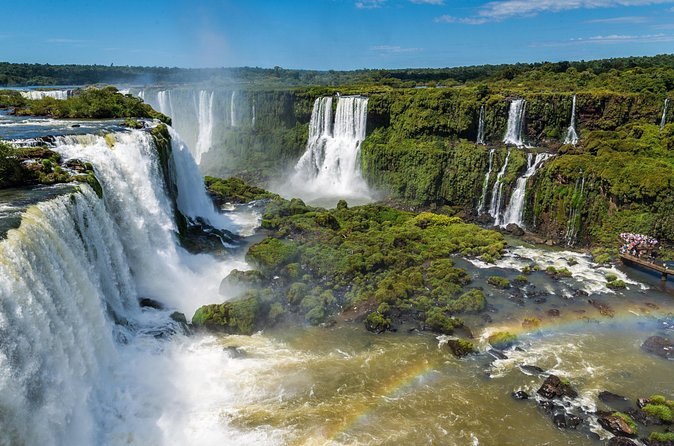
Argentina if you have one day: 3.5 km of walkway that takes you among the falls, plus the boats. Brazil if you have half a day or want the photograph: 1.5 km of paved trail facing the entire Argentine rim. Both, over two days, if you can — they are different experiences rather than two views of the same one.
Why this is the first question, and not a small one
Almost every other decision about a visit follows from it. Which side you pick decides which airport you fly into, which town you sleep in, which currency you carry, whether you need a Brazil e-Visa and how much walking you do. It also decides what you will remember, because the two parks genuinely do different jobs.
The geography is simple. The falls curve, and Argentina holds roughly 80 per cent of them. That means Argentina owns the walkways that take you along and above the water, and Brazil — with the smaller share — owns the view of all of it at once.
What does each side actually give you?
| Argentina | Brazil | |
|---|---|---|
| Share of the falls | About 80% | About 20% |
| What you get | Among and above the water | The whole rim, opposite |
| Walking | ~3.5 km across two circuits | 1.5 km, one paved trail |
| Steps | ~180 on the Lower Circuit | Very few |
| Transport inside | Tren Ecológico | Panoramic buses |
| Boat under the falls | Gran Aventura | Macuco Safari |
| Helicopter | Not permitted | Yes, from outside the park |
| Time needed | 6–8 hours | 2–3 hours |
| International adult | AR$ 60,000 | R$ 134,00 |
| Open | 08:00–18:00 daily | 09:00–16:00, 08:30 at weekends |
Read that table as two different products rather than as a ranking. Neither column is a worse version of the other, and the full detail behind each sits on the Argentine side and the Brazilian side.
If you only have one day, which should you pick?
Argentina, in most cases. A full day there gives you both circuits, the train, the option of the boat and several hours of being level with water that is falling eighty metres. It is the version of Iguazu you cannot get anywhere else.
Pick Brazil instead if any of these is true: you are travelling with someone who cannot manage 3.5 kilometres and 180 steps; you have half a day rather than a whole one; you are already staying in Foz do Iguaçu and do not want to spend an unpredictable hour at immigration; or the panorama is specifically the photograph you came for.
Can you do both in one day?
Yes, and hundreds of people do it every morning. The shape is fixed by the Brazilian 16:00 close: Brazil first, cross at lunchtime, Argentina in the afternoon. What you get is the whole Brazilian trail and about ninety minutes on the Argentine side — enough for one circuit, not two, and no boat.
What you lose is margin. If the immigration queue runs long, the Argentine half shrinks to whatever is left. That is the trade, and it is a reasonable one if a second day is genuinely not available.
If you do both in a day, book it guided. Not for the guiding — for the paperwork. A day that crosses handles two park entrances and two immigration posts while you stay in the vehicle, which is most of the friction removed.
How much does each side cost?
An international visitor pays AR$60,000 in Argentina, which includes the Tren Ecológico, and R$134 in Brazil, which includes the trails and the panoramic buses. Neither ticket is valid on the other bank, so doing both means paying both.
On the Argentine side, staying in Puerto Iguazú also adds a municipal eco-tourism tax collected through your accommodation. The municipality does not publish a current 2026 rate, so ask your hotel rather than budgeting a figure from a forum. Parking, lockers and the residents' rates are all listed on plan your visit.
Which side is better for photographs?
They want different hours from you. The Brazilian trail faces the Argentine rim and repays an afternoon, when the sun is behind you and the whole line of falls is lit. The Argentine circuits are cleaner in the morning, before the spray has built and before the walkways fill.
Rainbows appear in the gorge whenever the sun is low and the spray is thick, which on both sides means the first and last hours of the day. If photographs are the point, that alone is an argument for two days rather than one.
Which side works better with limited mobility?
Brazil. The Trilha das Cataratas is paved, gently graded and served by buses at both ends, and the park lists accessible trails among its facilities. On the Argentine side the Upper Circuit is level for its whole length, but the Lower Circuit's 180 steps are not negotiable and the boat is reached by roughly 300 metres of stairs.
One private departure here runs wheelchair-accessible transport with infant seats, which solves the journey rather than the walkways. It is the exception rather than the rule, so read the card before assuming.
What is currently closed, and does it change the answer?
It changes it slightly, in Brazil's favour. The Argentine Garganta del Diablo circuit — the walkway out to the lip of the chasm — has been closed since 3 August 2026, with the structure dismantled to protect it from the river, and no reopening date announced.
The Brazilian trail still ends at a walkway looking straight across the same chasm. That walkway closes on its own account when the flow is extreme, as it did at 13:00 on 11 September 2026, but it is there. If the Throat is the reason you are coming, Brazil is currently the side that can show it to you.
Where should you sleep?
Puerto Iguazú is the smaller, quieter town, 17 kilometres from the Argentine gate, and the base for most of the days that include the circuits and the Gran Aventura boat. Foz do Iguaçu is much larger, with more flights, more hotels, the Macuco Safari and the helicopter operators.
Sleep on the side you intend to spend the most time on, because the crossing costs an unpredictable hour each way. If you are flying in from elsewhere in Brazil, that is Foz; if you are coming down from Buenos Aires, it is Puerto Iguazú. The routes are on how to get to Iguazu Falls.
What if you are only passing through?
Plenty of visitors arrive on a morning flight and leave on an evening one, and that is a real constraint rather than a failure of planning. With six or seven usable hours, the Brazilian side is the honest answer: the trail is 1.5 kilometres, the buses do the distance, and you can be back at the airport without hurrying.
The Argentine side in that window means the Upper Circuit and the train and not much else, which is a thin version of a good day. If the flights are fixed and the side is not, let the clock choose. The Iguazu Falls guided tours that collect from each airport are compared by departure point, so you can see what fits the hours you actually have.
What does each side cost in time, not money?
Brazil asks two to three hours of you, which is why it fits an afternoon after a flight or a morning before one. Argentina asks six to eight, because the two circuits are 3.5 kilometres apart in effort rather than distance and the Tren Ecológico between them runs to a timetable you do not control.
Add an hour each way if you are crossing the border, and another if you want a boat. Time, rather than the ticket price, is what actually rations a visit here — and it is why Parque Nacional Iguazú rewards a whole day while Parque Nacional do Iguaçu rewards a well-chosen half.
The verdict, by traveller
- One day, fit and mobile: Argentina, all of it.
- One day, limited mobility or small children: Brazil.
- One day, want to say you stood in both: the guided crossing, Brazil first.
- Two days: Brazil on day one, Argentina on day two, border crossed once.
- Photographers: two days, Argentina in the morning and Brazil in the afternoon.
- Coming for the Devil's Throat in 2026: Brazil, and a helicopter if the budget stretches.
Whichever you pick, the practical detail is on plan your visit and the guided days that fit each answer are compared at Iguazu Falls Tours.
Questions this guide gets asked
Is one side enough?
Do I need a visa to cross?
Which side has the Devil's Throat?
Is the Brazilian side really only two hours?
Which side is cheaper?
Can I leave luggage while I cross?
Sources
- Iguazú Argentina — tarifas (Argentine admission and parking, read 13 September 2026)
- Iguazú Argentina — horarios y consejos (Argentine hours and train timetable)
- The Brazilian park — 2026 ticket prices (effective 19 December 2025)
- The Brazilian park — passarela notice, 11 September 2026
- Administración de Parques Nacionales — the Argentine park
- UNESCO World Heritage — the Argentine inscription
Prices and opening times change. Verify both parks before you travel.
Tours that answer this question for you
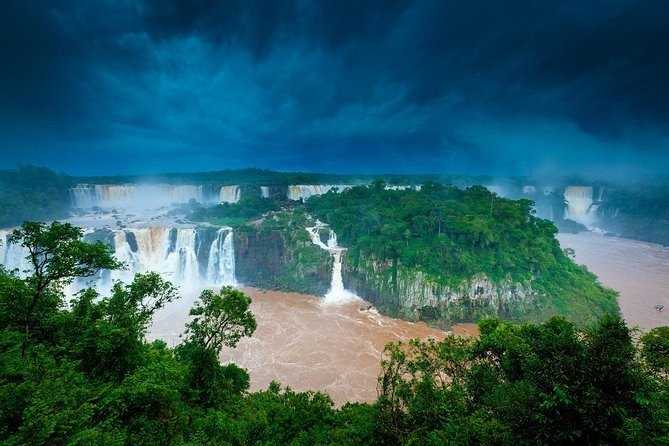
Full Day Iguassu Falls Both Sides - Brazil and Argentina | Iguazu Falls Tour
Both parks in one day, Brazil first, with the border handled for you.
From $136 per person
Check Availability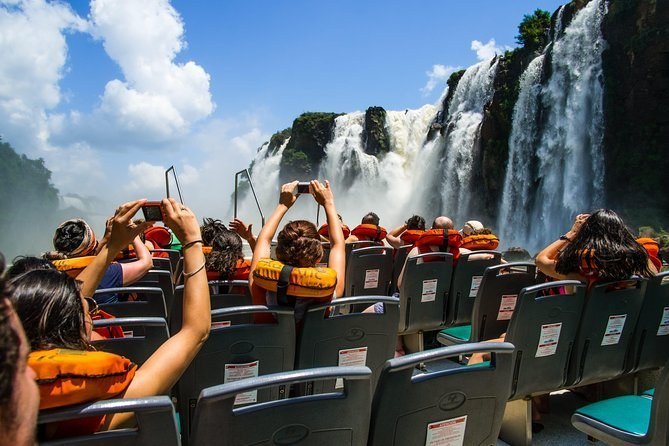
Iguazu Falls Tour, Boat Ride, Train and Safari Truck
The Argentine answer: both circuits, the train, the truck and the boat.
From $159 per person
Check Availability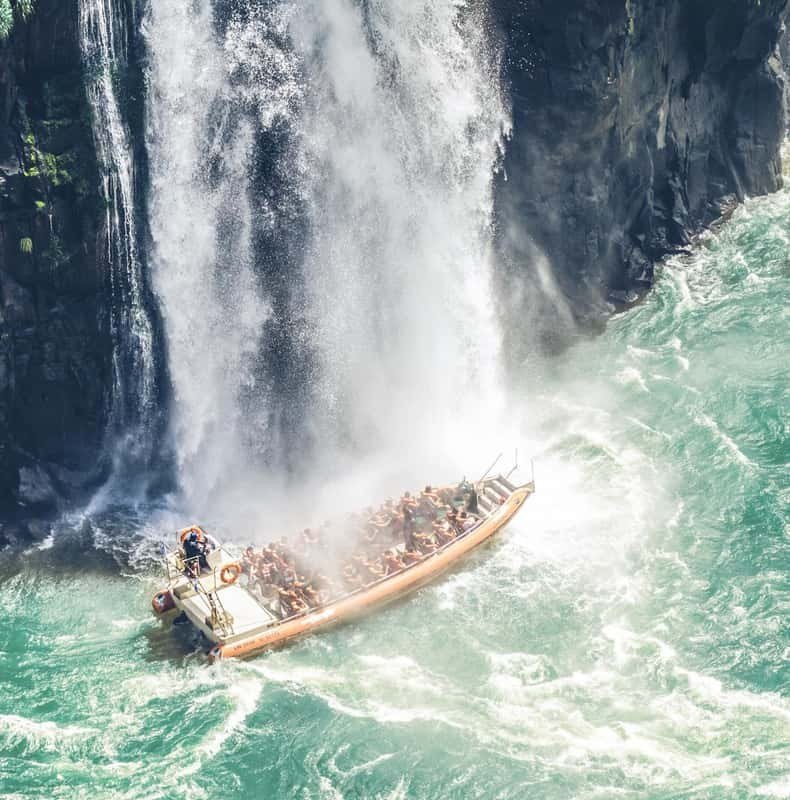
From Foz do Iguazu: Brazil Iguazu Falls & Macuco Safari Boat
The Brazilian answer: the panorama trail and the Macuco Safari, ticket included.
From $175 per person
Check Availability