The Best Time to Visit Iguazu Falls, and What a High-Water Year Changes
The short answer
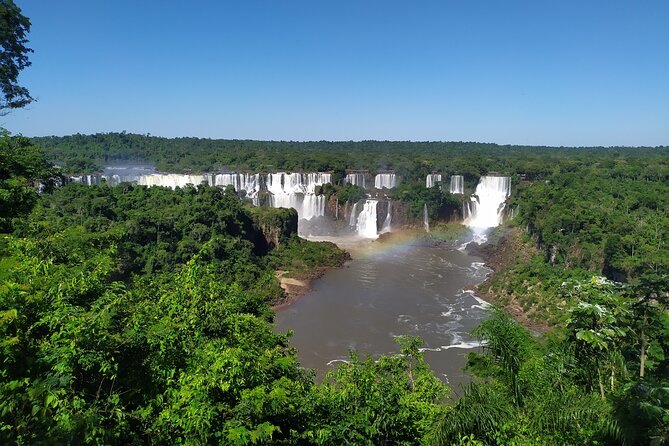
March to May is the best band in an ordinary year: the heat has gone, the crowds have thinned and there is usually still summer water in the river. July and August are the busiest months and the coolest. 2026 is not an ordinary year — the river has run five times its average and taken a walkway with it.
Is any month a poor choice?
No. Both parks open every day of the year, the Argentine one explicitly including holidays and rain, and the falls run all year round. There is no closed season and no month in which the water stops.
What changes between months is temperature, rain, how many people are on the walkway with you, and how much water is coming over the edge. Those four things do not move together, which is why "the best time" has more than one answer.
What are the seasons actually like?
| Season | Months | Temperature | Crowds | Flow |
|---|---|---|---|---|
| Summer | Dec–Feb | 24–33 °C, humid | Very high | Usually high |
| Autumn | Mar–May | 17–30 °C | Low | Often still high |
| Winter | Jun–Aug | 14–25 °C | Very high in Jul–Aug | Usually lower |
| Spring | Sep–Nov | 17–31 °C | Moderate | Rising |
The month-by-month detail, including what closes at each flow level, is on the weather page. This guide is about which of those months to choose.
When is it quietest?
March to June, and particularly May. The southern summer holidays have finished, the winter ones have not started, and both parks are noticeably emptier. That matters more here than at most attractions, because the Argentine circuits are narrow walkways and the train queues build through the morning.
The busiest months are the two southern school-holiday blocks: January–February and July–August. July 2026 brought 263,150 visitors to the Brazilian side alone, the highest month in that park's history, and August 174,005.
When is the water at its most impressive?
December to March in a typical year, when summer rain in the Iguazú basin feeds the river. High flow merges the individual cascades into wider, louder sheets and fills the gorge with spray.
Low water is not a disappointment, only a different picture: the falls separate into more distinct threads and the rock shows between them. What low water does stop is the ferry to Isla San Martín and, at the extreme, the boats.
What does a high-water year change?
A great deal, and 2026 is the case study. Sustained rain across Paraná, with an El Niño influence, pushed the river to several times its mean through the southern winter.
As of 13 September 2026
The 2026 high-water season
The Argentine Garganta del Diablo circuit has been closed since 3 August 2026, with the walkway dismantled to protect it and no reopening date announced. On 2 September the Brazilian park recorded a peak of 8,370,000 litres a second, and on 11 September it closed its own passarela at 13:00 with the flow above 8.4 million and rising. Both parks stayed open throughout, and every other circuit has run normally.
The practical consequence for choosing a month is this: in a high-water year the water is more impressive and the infrastructure is less reliable. If the Devil's Throat walkway is what you are coming for, check its status before you book flights — the state of both parks is summarised on plan your visit.
When is the light best for photographs?
Early and late, on both sides, and for different reasons. The Brazilian trail faces the Argentine rim and works best in the afternoon with the sun behind you; the Argentine circuits are cleaner in the morning before the spray builds and before the walkways fill.
Rainbows stand in the gorge whenever the sun is low and the spray is thick, which is most mornings and most late afternoons in any month. Overcast days are not a loss — the water photographs better without hard shadow.
Which month should you pick?
- April or May if you want the best compromise: mild, quiet and usually well-watered.
- January or February if volume is the point and you can take the heat and the crowds.
- June if you want the park nearly to yourself and do not mind a cold first hour.
- September or October if you want spring forest and rising water, with the caveat that closures start here.
- Avoid mid-July and the last two weeks of December unless the dates are fixed for you.
Does the weather ever close the parks?
The parks, no. Individual walkways, yes, and increasingly so as the flow rises. The Brazilian passarela is the first thing to close and the trail is the last; on the Argentine side, the Devil's Throat circuit is the exposed one and the Upper and Lower Circuits stay open.
Rain alone closes nothing. The Argentine park advertises that it opens every day of the year including in rain, and a wet day usually means fewer people and more water.
Whatever month you pick, book something that refunds. Most of the guided days here cancel free up to 24 hours ahead, which is the only practical hedge against a river nobody can forecast.
What about the high-season opening hours?
The Argentine park keeps the same hours all year — 08:00 to 18:00, circuits from 08:20, last entry 16:45. The Brazilian park opens an hour earlier, at 08:00, from 20 December to 31 January, which is worth having in the month when everything is busiest.
That extra hour is the single best thing about visiting in the high season, and it is only useful if you take it.
How do you check what is open before you fly?
Both parks publish their own notices, and they are the only sources that matter. The Argentine park announces circuit suspensions directly; the Brazilian park posts a dated notice whenever the passarela closes, with the flow figure that caused it. You want both bookmarked before you book anything.
Do not rely on a tour operator's page to tell you. They are describing a normal day and they update slowly, and several of the listings here still show the Devil's Throat as an itinerary stop while their own small print says it is shut. Check the parks, then book the day, then check again the morning you go.
Which months have the fewest closures?
On the evidence of 2026, the southern autumn. March to May sits after the summer rain has drained through and before the winter systems arrive, which is the window in which the river is most likely to be high enough to be impressive and low enough to leave every walkway standing.
The riskiest stretch for closures is the one nobody expects: late winter and early spring, August through October, when sustained basin rain can push the flow to several times its mean. That is precisely when the Argentine Devil's Throat walkway came down in 2026. It is also when the water is at its most extraordinary, which is the whole tension of picking a month here — and why the Iguazu Falls tour packages worth booking are the ones that refund.
Does the month change which side to visit?
Mildly, and in two ways. In the hottest months, December to February, the shaded 1.5 kilometres of the Trilha das Cataratas is a kinder walk than 3.5 kilometres of exposed Argentine walkway at 33 °C. In the coolest, June to August, the reverse is true and the Argentine circuits are comfortable all day.
The second way is closures. High flow takes out structures over the water before it takes out anything else, and in 2026 that has meant the Argentine Devil's Throat walkway and, on some afternoons, the Brazilian passarela. Neither park closes, and Parque Nacional Iguazú in particular has run every other circuit normally throughout.
How far ahead should you book?
A few days in the quiet months, one to two weeks between December and February and through July and August. Brazilian park tickets are capped by the hour, so a slot in a busy month is a real constraint rather than a formality.
Tours fill faster than tickets do, particularly the ones with a boat included. Which of those they are is on every card at Iguazu Falls Tours.
Questions this guide gets asked
What is the rainiest month?
When are the falls fullest?
Is July a bad month?
Will I see rainbows?
Does low water spoil the visit?
Should I avoid 2026 because of the closures?
Sources
- Iguazú Argentina — tarifas (Argentine admission and parking, read 13 September 2026)
- Iguazú Argentina — horarios y consejos (Argentine hours and train timetable)
- The Brazilian park — 2026 ticket prices (effective 19 December 2025)
- The Brazilian park — passarela notice, 11 September 2026
- Administración de Parques Nacionales — the Argentine park
- UNESCO World Heritage — the Argentine inscription
Prices and opening times change. Verify both parks before you travel.
Tours that work in any month
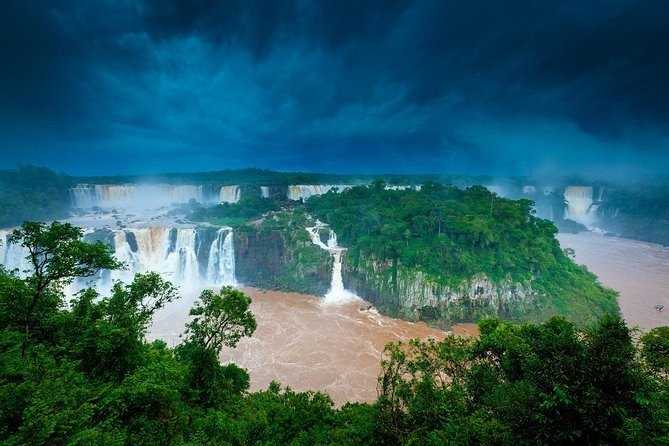
Full Day Iguassu Falls Both Sides - Brazil and Argentina | Iguazu Falls Tour
Both parks in one day, with free cancellation up to 24 hours ahead.
From $136 per person
Check Availability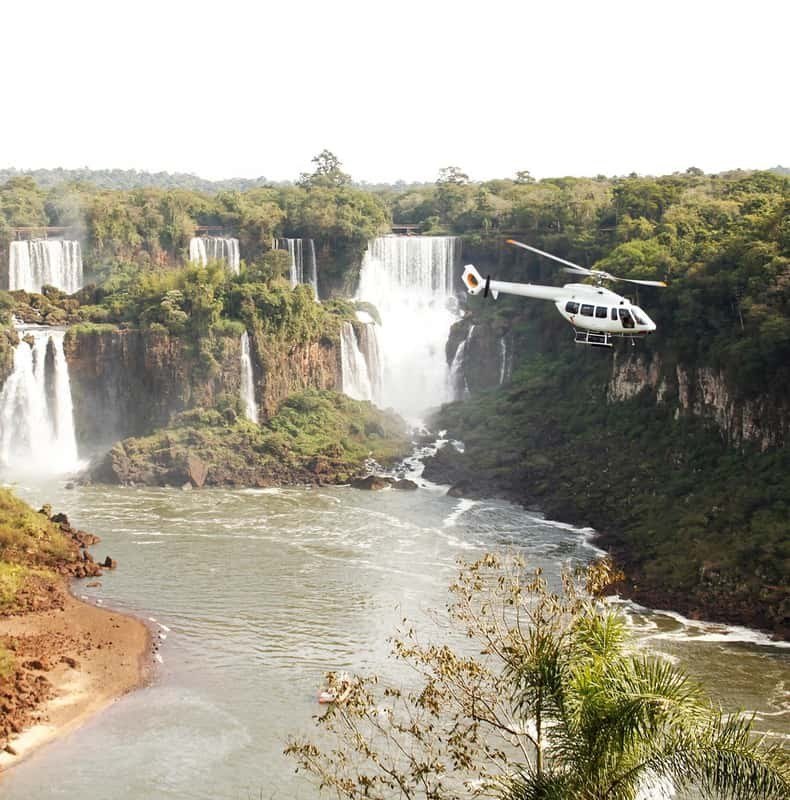
Iguazu Falls 10-Minute Panoramic Helicopter Flight
The one view a closed walkway cannot take away from you.
From $253 per person
Check Availability
Private Full-Day Iguazu Falls Tour with Airfare from Buenos Aires
A fly-in day from Buenos Aires when the date is fixed and the month is not.
From $370 per person
Check Availability