How to Visit Iguazu Falls: Tickets, Hours, Tours and Everything You Need to Know
The short answer
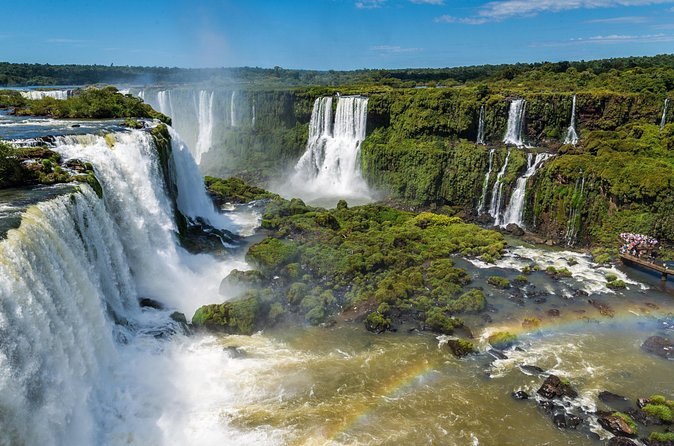
Iguazu Falls sits on an international border and is two national parks, not one. Argentina charges AR$60,000 and opens 08:00–18:00 every day of the year; Brazil charges R$134 and opens 09:00–16:00 on weekdays, 08:30 at weekends. Allow a full day for Argentina and half a day for Brazil. As of 13 September 2026 the Argentine Devil's Throat walkway is dismantled and has no reopening date.
Where Iguazu Falls actually is
The falls are on the Iguazú River where Misiones province in Argentina meets Paraná state in Brazil, about 20 kilometres upstream of the point where the Iguazú joins the Paraná and Paraguay begins. UNESCO counts 275 cascades along a rim some 80 metres high and 2,700 metres across.
Argentina holds roughly 80 per cent of them and all the walkways that take you among them. Brazil holds the rest and the view of everything. That single fact decides almost every other decision you will make about this trip, and each side is set out in full on the Argentine side and the Brazilian side.
What it costs to get in
Two parks, two currencies, two tariffs. Neither ticket works on the other bank.
| Argentina | Brazil | |
|---|---|---|
| International visitor | AR$ 60,000 | R$ 134,00 |
| Regional | AR$ 25,000 (Argentina) | R$ 121,00 (Brazil & Mercosul) |
| Local | AR$ 8,000 (Misiones) | R$ 26,00 (Passe Comunidade) |
| Children | Free under 6 | Free up to 6 |
| Included | The Tren Ecológico | The trails and the panoramic buses |
Argentina's tariff also covers parking at AR$12,500 for a car. The full table, including the student and pensioner categories, is on plan your visit.
The charge nobody publishes
If you stay in Puerto Iguazú you will also pay a municipal eco-tourism tax, collected through your accommodation. Under-12s, Misiones residents, pensioners and people with a disability are exempt. The rate is indexed and the municipality does not publish a current 2026 figure, so ask your hotel rather than budgeting a number from a forum post.
When each park is open
The Argentine park opens at 08:00 every day of the year, including holidays and including rain. Its circuits open at 08:20 and close to new arrivals at 16:45, and the last train out to Garganta station leaves at 15:30.
The Brazilian park runs 09:00 to 16:00 Monday to Friday and 08:30 to 16:00 at weekends, opening an hour earlier between 20 December and 31 January. That 16:00 close is the hard edge of any day that tries to cover both countries.
The Devil's Throat, as of 13 September 2026. Argentina suspended access to the Garganta del Diablo circuit on 3 August 2026 as the river rose, and began taking the walkway apart to protect it. No reopening date has been announced. You can still see the chasm: the walkway at the end of the Brazilian trail looks straight across it, and a helicopter flight looks into it from above.
Getting there
Two airports serve the falls — Cataratas del Iguazú (IGR) on the Argentine side and Foz do Iguaçu (IGU) on the Brazilian. Puerto Iguazú is 17 kilometres from the Argentine gate and Foz do Iguaçu a similar distance from its own. Buenos Aires is 1,300 kilometres south, which is a flight rather than a drive; the operators who sell a single day from there put the outbound flight between 06:00 and 08:30 and collect you around 04:30.
Crossing between the two parks means an international border. Carry your passport, and if you hold a US, Canadian or Australian one, note that Brazil has required an e-Visa since 10 April 2025. The whole journey is laid out on how to get to Iguazu Falls.
How long you need
- Half a day — the Brazilian trail, its viewpoints and the walkway at the end. Two to three hours of walking.
- One full day — the Argentine circuits, with the train between them. Six to eight hours if you want to walk both without watching the clock.
- Two days — one park each, crossing the border once. The version nobody regrets.
- Three days — the above plus a boat, a quiet trail and time for the weather to change its mind.
If you have one day and want both countries, start in Brazil and cross at lunchtime. Doing it the other way round runs you into the Brazilian 16:00 close.
What to bring
Closed shoes with grip, because the walkways are metal and permanently wet. Sun protection and repellent, both of which the Argentine park asks to be low-impact. Cash in pesos and reais if you are paying admissions on the day. Your passport if you are crossing. And if you have booked a boat, a complete change of clothes — every operator says so and none of them is exaggerating.
Leave large bags behind. Argentina rents lockers at AR$13,500 and AR$21,000, and one operator bans luggage on its transfer outright.
Do you need a tour?
Honestly, not always. Both parks sell tickets online, both are reachable by local bus, and both let you walk the circuits unaccompanied. If you have two full days and are comfortable on public transport, going independently works and costs less.
A guided day buys three specific things: someone who knows which circuit is open this morning, the border handled while you stay in the vehicle, and the boat as a booking rather than a queue. Some fares also carry the gate fee, which changes the arithmetic entirely; where each one lands is set out on the boat tours page and the both-sides days.
The one booking tip that matters. Buy the park ticket online before you travel even if you have a guided day, unless that day's card says the admission is included. More than one traveller has found out at the entrance that it was not.
Where to sleep, and why it matters
Puerto Iguazú in Argentina is the smaller and quieter of the two towns, 17 kilometres from the Argentine gate, and it is where most of the guided days that include the circuits and the boat collect from. Staying there adds the municipal eco-tourism tax to your accommodation bill.
Foz do Iguaçu in Brazil is much larger, with more flights, more hotels and the helicopter operators. It is the base for the Macuco Safari and for most days that cross to Argentina and back. Choose by the side you want to spend the most time on, because the crossing costs an unpredictable hour each way — the detail is on how to get to Iguazu Falls, and the Iguazu Falls ticket prices for both parks sit on plan your visit.
Eating, toilets and the practical stuff
Both parks have restaurants, cafés and toilets at the main stations and near the trailheads, and both have drinking-water points. The Argentine park rents lockers at AR$13,500 and AR$21,000 if you would rather not carry a wet change of clothes round all day. Neither park is a place to arrive hungry and hope.
Eat where you are told to. Coatis have learned exactly where people open bags, and feeding one — deliberately or by dropping crumbs — is the thing both parks ask you hardest not to do. What else lives here is on the wildlife page.
What most people get wrong
- Assuming one ticket covers both sides. It does not, and never has.
- Leaving Brazil until the afternoon. It closes at 16:00.
- Booking the boat for a child under 12. Both boats set a minimum age.
- Arriving at 11:00. The first train of the day is the only one without a queue.
- Packing for a dry day. The spray reaches the walkways whether or not you booked a boat.
Know what it costs and when it opens? The next decision is which day to book. Every guided Iguazu Falls tour is compared at Iguazu Falls Tours by the park it enters and the fee it carries.
Tours that cover all of the above
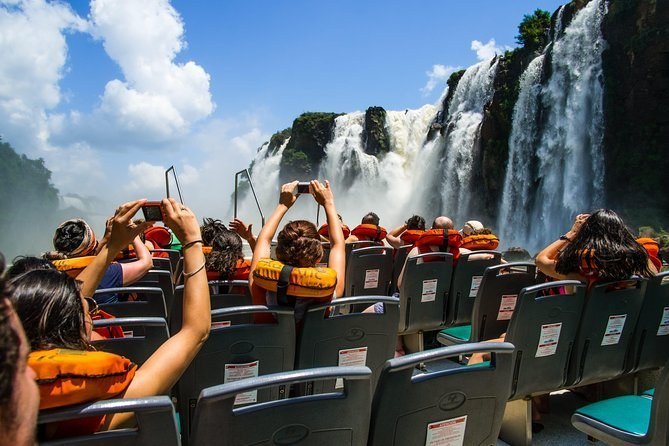
Iguazu Falls Tour, Boat Ride, Train and Safari Truck
The full Argentine day — train, both circuits, jungle truck and the boat.
From $159 per person
Check Availability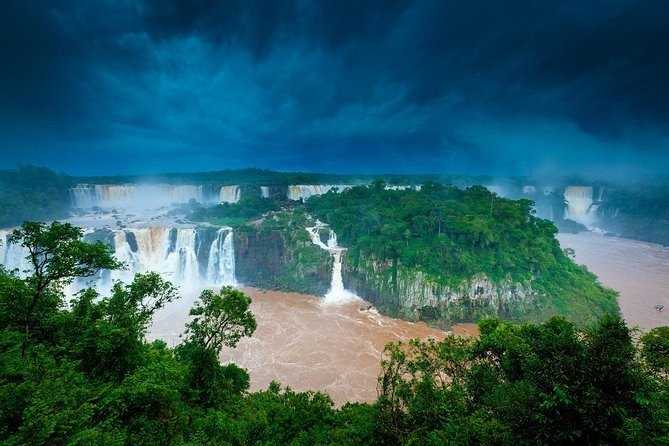
Full Day Iguassu Falls Both Sides - Brazil and Argentina | Iguazu Falls Tour
Both parks in one day, with the border crossing handled for you.
From $136 per person
Check Availability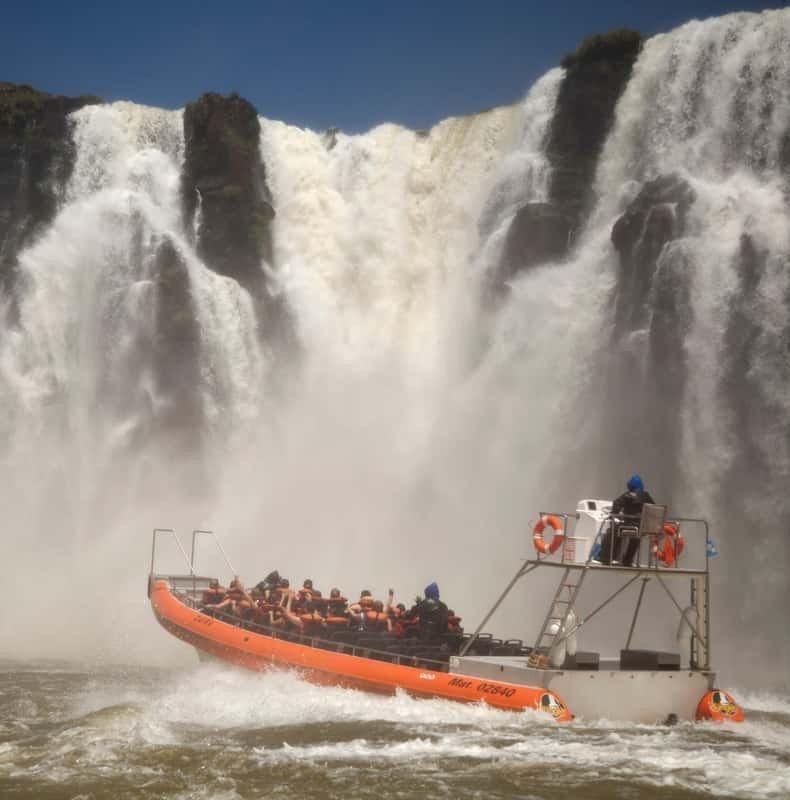
Puerto Iguazu: Excursion to the Argentinean Falls + Gran Aventura
Six hours in the Argentine park with the Gran Aventura boat in the fare.
From $138 per person
Check Availability